Agency Guide to CGI & FOOH Production
How agencies can work with CGI and FOOH production studios to deliver ambitious brand campaigns with greater creative and production flexibility.
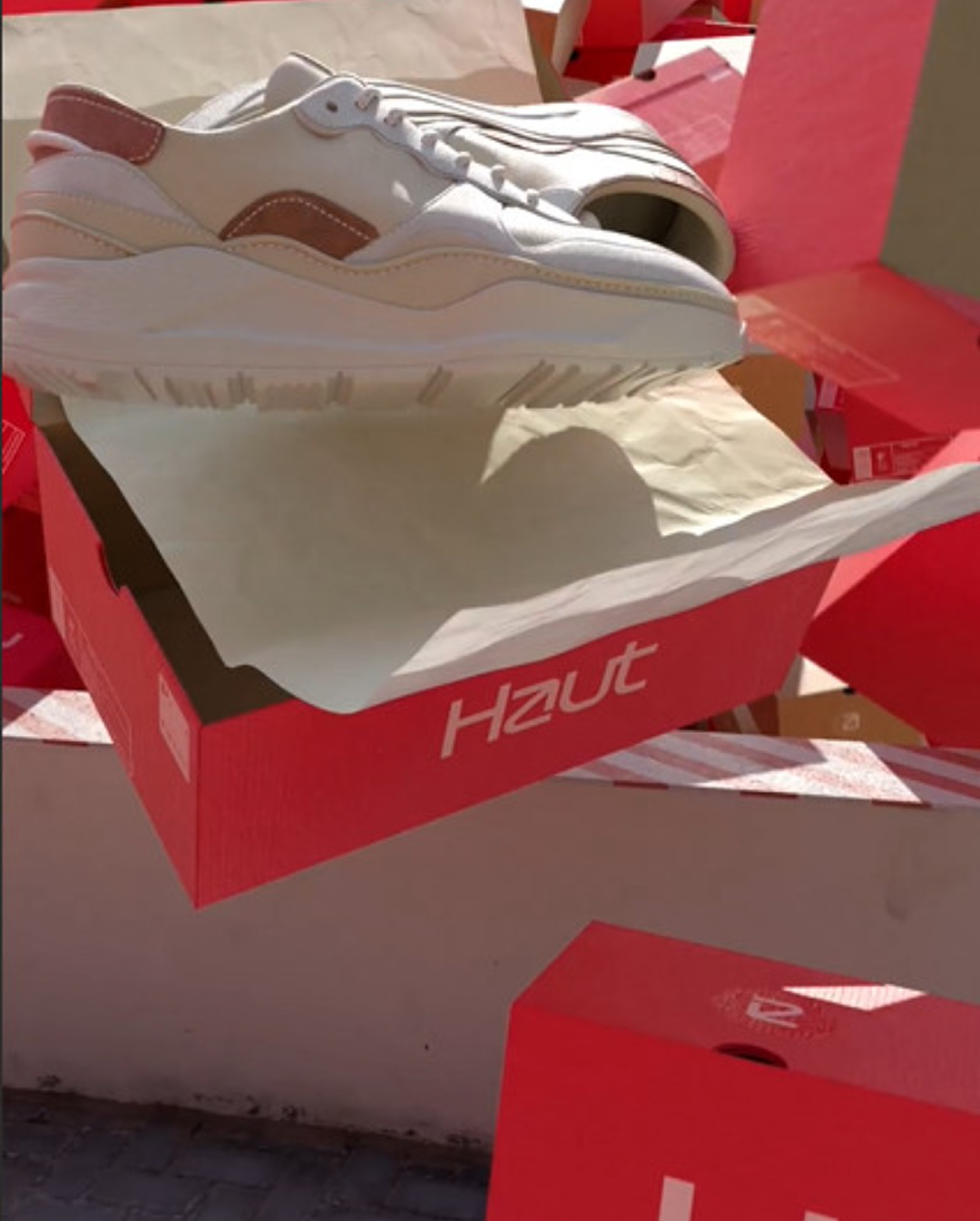
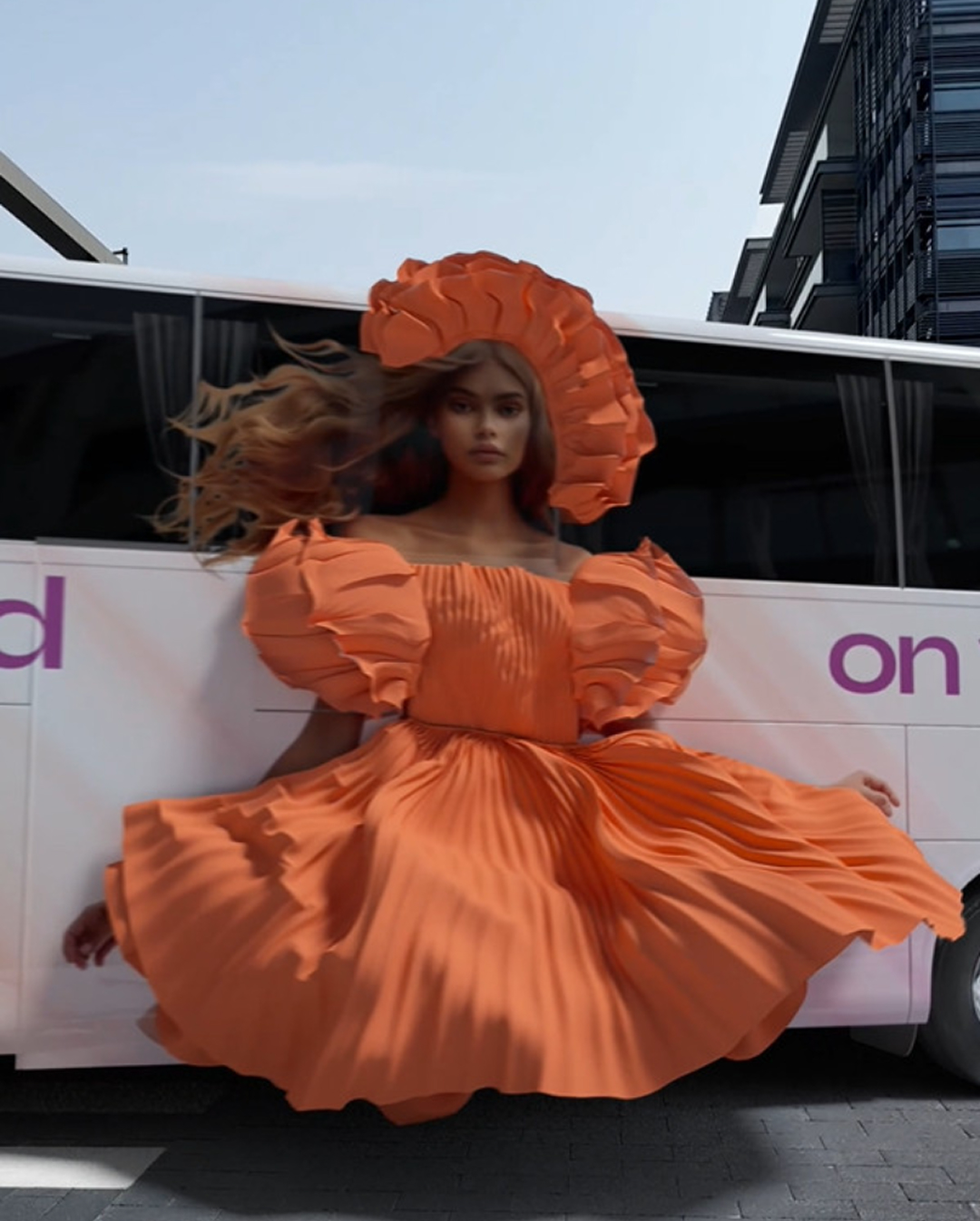
For creative agencies, CGI and FOOH can open up ideas that would be difficult, expensive or sometimes impossible to produce through traditional filming. A product can appear at enormous scale in the middle of a city, an architectural concept can become a cinematic environment, or a campaign can be built entirely around a visual illusion that exists only through CGI.
The challenge for an agency is rarely finding a studio that can make something look impressive. The more important question is whether the production partner can fit naturally into the agency's creative process — understanding the idea, protecting the creative direction, communicating clearly and delivering the final assets without creating another layer of complexity. The best CGI partnerships therefore feel less like outsourcing and more like an extension of the agency's own production team.
A CGI project can involve many different disciplines, from visual development and 3D modeling to animation, VFX, compositing and post-production. When an agency brings in an external studio, the quality of the final film depends not only on the individual artists involved but also on how these disciplines are coordinated. For that reason, choosing a production partner should begin well before a quotation is requested. The agency needs to understand how the studio thinks, communicates and develops an idea.
An agency usually arrives with more than a technical brief. There is a campaign idea behind it, a visual reference, a brand language and a particular reason why the work needs to exist.A strong CGI studio should be able to understand that larger creative intention rather than simply translating a list of shots into 3D. This becomes especially important when the concept is still developing and the production team needs to help determine what is visually possible, what needs to change and where the strongest version of the idea lies.
The relationship works best when the studio can contribute production expertise without taking control away from the creative team.

A studio's showreel is useful, but it rarely tells the complete story. Agencies should look at case studies and finished campaigns to understand how the studio handles different types of production, from product-focused CGI to large-scale FOOH, VFX integration and more complex commercial work. It is also worth looking beyond visual style. Two studios may produce equally polished images while having completely different production structures behind them. One may be highly collaborative and built around agency partnerships, while another may work primarily with direct clients and have a very different approval process.The right choice depends on the kind of relationship the agency needs.
For agencies that want to keep the client relationship entirely in-house, white-label production can be particularly valuable. The external studio becomes an extension of the agency's production capabilities, working behind the scenes while the agency remains the primary creative and strategic partner. This model allows an agency to take on CGI-heavy campaigns without having to build a permanent internal 3D department.
For the production partner, that also means understanding when to stay visible and when to work quietly in the background. Clear communication, reliable timelines and respect for the agency's client relationship become just as important as the quality of the imagery.
A CGI production partner can also become involved before a campaign is fully awarded. Depending on the opportunity, this may include visual references, moodboards, early concepts, technical input or selected pitch visuals that help an agency turn an idea into something the client can immediately understand. For agencies we work with regularly, this collaboration can go further. We often develop the CGI or FOOH part of a pitch together, helping translate the creative idea into a realistic visual and production approach. This gives the agency a stronger way to present the concept, while also allowing the production partner to identify technical considerations and opportunities early in the process. For more detailed 3D pitch work, the scope should be agreed upfront, particularly when modelling, animation or rendering is required. A clear approach to pitch support allows both sides to contribute their expertise while keeping the larger production scope separate until the campaign is confirmed.

Once the right production partner has been selected, the next challenge is turning an ambitious creative idea into something that can actually be produced. This is where the production process matters. CGI gives creative teams an enormous amount of freedom, but that freedom works best when visual development and technical planning happen together.
The strongest productions do not begin with a request to "make this in CGI." They begin with a question about what the campaign needs to communicate.A product launch may need a striking hero moment. A FOOH campaign may depend on a surprising interaction with a real environment. An automotive film may need to communicate speed, engineering or a particular sense of luxury. Once the creative purpose is clear, the production team can determine which combination of 3D, VFX, live-action footage, AI or compositing is most appropriate.
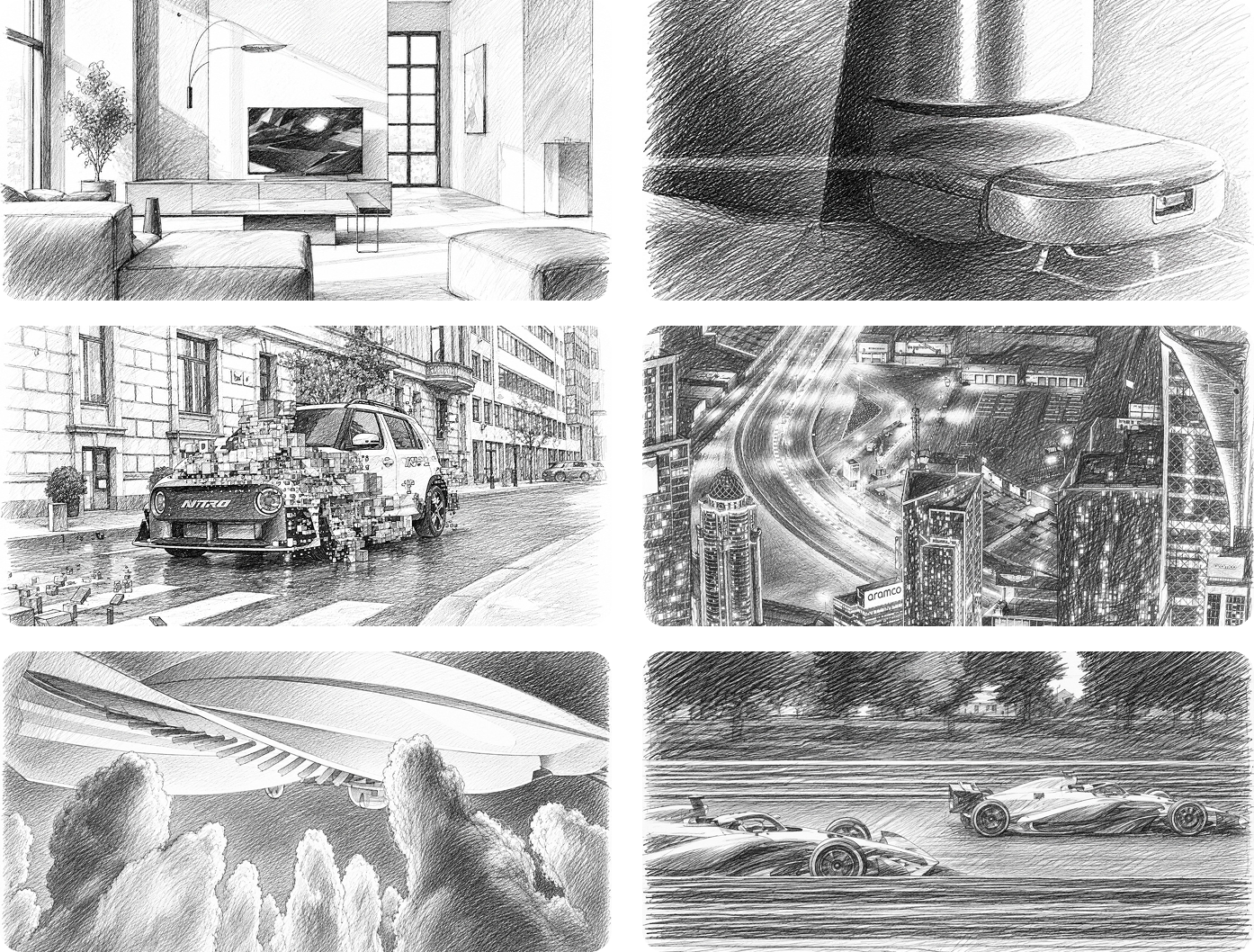
Before the final production begins, agencies and studios need to establish what the film will actually look like.Sketches, storyboards, styleframes, camera planning and early 3D development all serve the same purpose: they allow creative decisions to be made while the project is still flexible. This stage can be particularly important for FOOH. A concept may look spectacular in a written treatment but become much less convincing once camera perspective, scale, lighting and the real environment are taken into account.Good visual development makes those problems visible early, when they are still relatively easy to solve.
Once the visual direction has been approved, the production moves into the more technical stages of CGI. Models may need to be built or adapted, materials developed, environments created and animation planned. Lighting, simulation, rendering and compositing then bring the different elements together. For agencies, understanding this process is useful because it explains why seemingly small creative changes can sometimes have a significant production impact. Moving a camera, changing the shape of a product or altering an environment late in production may affect several departments at once. A good studio will make those dependencies clear rather than simply passing unexpected complexity back to the agency.
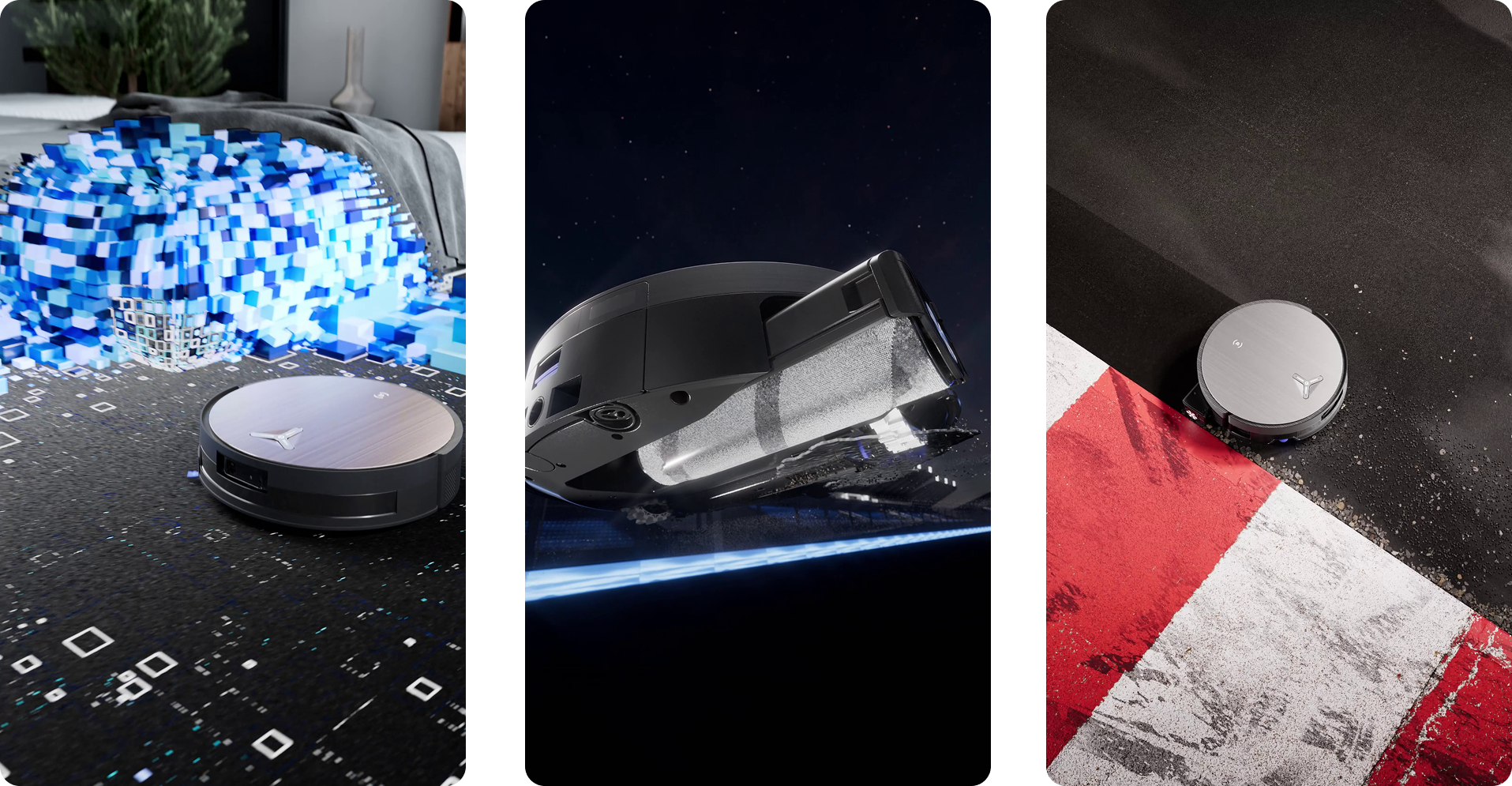
AI has introduced another layer to the production conversation. It can now be useful for visual exploration, concept development, environment generation, storyboarding and certain post-production tasks.
But AI does not automatically replace traditional CGI. For many commercial projects, the strongest approach is a hybrid one: AI can accelerate exploration and help develop visual directions, while 3D provides the precision and consistency required for the final product, camera and animation.For agencies, the important question is therefore not whether a studio uses AI, but whether it knows where AI genuinely improves the production and where controlled 3D or VFX remains the better solution.
The agency's role does not end when the production begins. In many projects, the agency is responsible for protecting the client's expectations while coordinating creative decisions between several teams.A strong production partner should make that responsibility easier rather than adding another layer of management.
A CGI brief does not need to predict every technical detail of the production. What matters most is giving the studio enough context to understand the creative objective.The campaign idea, intended audience, brand requirements, references, deliverables and key deadlines are usually more valuable than an overly prescriptive technical brief. For FOOH, additional information about the location, available footage, camera movement and desired interaction with the environment can become particularly important. The earlier these elements are understood, the easier it is to build a realistic production plan.
Once the overall campaign direction is clear, a few additional details can make the production process much more efficient. The studio should have access to the key product information, available CAD or 3D assets, required formats and deliverables, the campaign or launch deadline and, where possible, an approximate budget range. It is equally useful to share the client's visual preferences early. References that the client responds to, styles they like, and examples of what they do not want can help the production team understand the visual direction before development begins. This can be particularly valuable when several creative routes are possible.
The best briefs leave room for creative and technical input from the production studio. Rather than prescribing exactly how every shot should be made, they define the objective, audience, product and constraints clearly enough for the production team to recommend the most effective approach.
CGI budgets can vary significantly even when two projects appear similar on paper. A short film may involve relatively simple product animation, while another fifteen-second film could require complex environments, simulations, VFX and multiple rounds of compositing. This is why agencies should compare production scope rather than simply comparing the number on a quotation. The same principle applies to timelines. A faster production is not necessarily a better production if it leaves too little time for visual development, approvals or technical revisions. For a broader breakdown of how CGI and FOOH production costs can vary, see the 2026 CGI & FOOH Production Pricing Guide.
Revisions are a normal part of creative production, but they become much easier to manage when they happen at the right stage. Changing a visual direction during early development is very different from changing it after final animation and rendering. A professional workflow therefore gives the agency opportunities to review the work before the most expensive production stages are locked. This creates a healthier approval process for both sides. The agency has more confidence in what it is approving, while the studio can protect the production schedule from unnecessary late-stage changes.
A campaign rarely ends with one master film.The same CGI assets may need to work across a hero film, social cutdowns, vertical formats, square versions, paid-media edits or different campaign placements. When those requirements are considered from the beginning, the studio can structure the production around them. This can also create long-term value for the agency. A well-built 3D asset or environment may become useful again for another campaign, product launch or market adaptation rather than being recreated from scratch.
Ultimately, the value of an external CGI studio is not simply that it can produce technically impressive imagery.The real value is that it allows an agency to say yes to ideas that would otherwise be difficult to execute, while maintaining control over the creative relationship with the client. The strongest partnerships are built around trust. The agency brings the strategy, creative direction and client understanding. The production studio brings specialist CGI, FOOH, VFX and technical expertise. When those responsibilities are clear, the production becomes more efficient and the final work becomes stronger.
HAUT CGI works with agencies and brands as an external CGI production partner across FOOH, full CGI, VFX, mixed reality and AI-enhanced production.The studio can operate as a visible production partner or within a white-label model, depending on how the agency wants to structure the client relationship. Projects can begin with a developed creative concept or at an earlier visual-development stage, where the production team helps determine how an idea can be translated into a practical CGI workflow.
For agencies working across multiple markets, the same production approach can also support different formats and campaign requirements, from cinematic hero films to social-first FOOH content and adapted deliverables.The goal is not to replace the agency's creative role. It is to extend what the agency can offer without requiring a permanent in-house CGI production team.
.png)