Luxury & Automotive CGI Production
How CGI, FOOH and VFX help luxury and automotive brands create precise, cinematic visuals for modern global campaigns
Published:
September 17, 2026
Luxury and automotive brands have always been judged by how they present the details. The surface of a car, the reflection across a watch, the texture of leather, the way light moves across metal — these small visual decisions can change the entire perception of a product.
That is one of the reasons CGI has become such an important part of premium brand communication. Instead of being limited by a physical location, weather, available vehicles or traditional shooting conditions, brands can construct an environment specifically around the product and control almost every element of the image. For automotive and luxury campaigns, this control is not simply a technical advantage. It becomes part of the creative language itself.
Premium products require a particular level of visual control. A traditional production can achieve extraordinary results, but it also comes with physical limitations. CGI removes many of those limitations and allows the product to exist in environments that would be difficult or impossible to create through conventional filming.
In luxury communication, realism is often found in the details rather than in the overall composition. A metallic surface needs to reflect its environment correctly. Glass needs to behave like glass. Leather, paint, chrome and fabric all respond differently to light. On an automotive project, even the proportions and geometry of a vehicle need to remain accurate. CGI allows these elements to be controlled individually. Lighting can be adjusted without changing the physical setup, materials can be refined repeatedly, and the camera can move through an environment that does not physically exist. The result is not simply a computer-generated version of a product. When done well, it can create the same visual confidence as a high-end physical production while offering far more creative freedom.

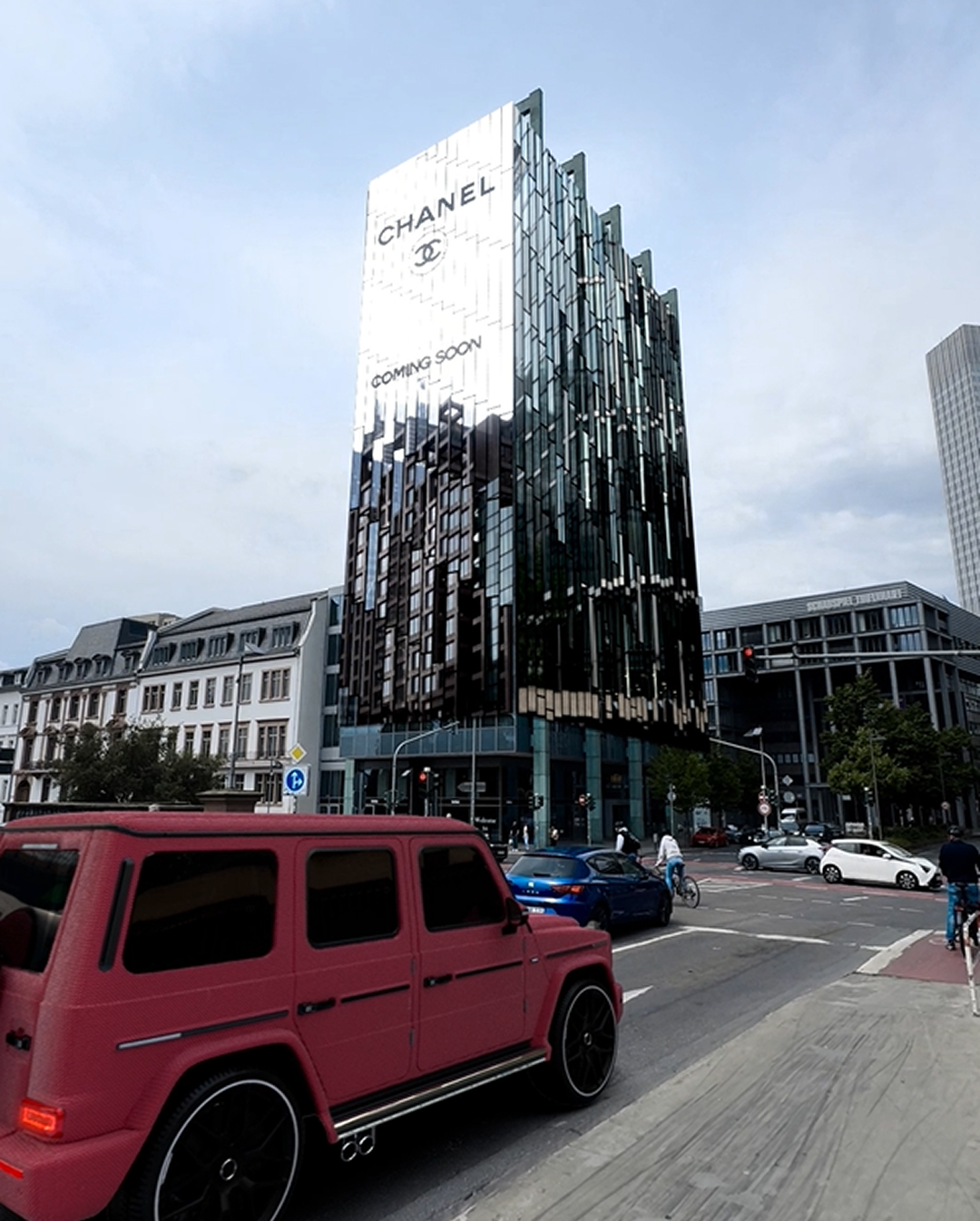
A luxury watch can be placed inside an abstract architectural world. A vehicle can move through a landscape designed entirely around the brand. A beauty product can appear at impossible scale in the middle of a city. This freedom is particularly powerful when a campaign needs a strong visual identity rather than a conventional product demonstration. For FOOH campaigns, the same principle becomes even more visible. A product can interact with a real city, building or landmark in a way that feels physically plausible while remaining impossible to capture through traditional filming. That tension between realism and impossibility is one of the reasons FOOH CGI has become such an effective format for social-first campaigns.
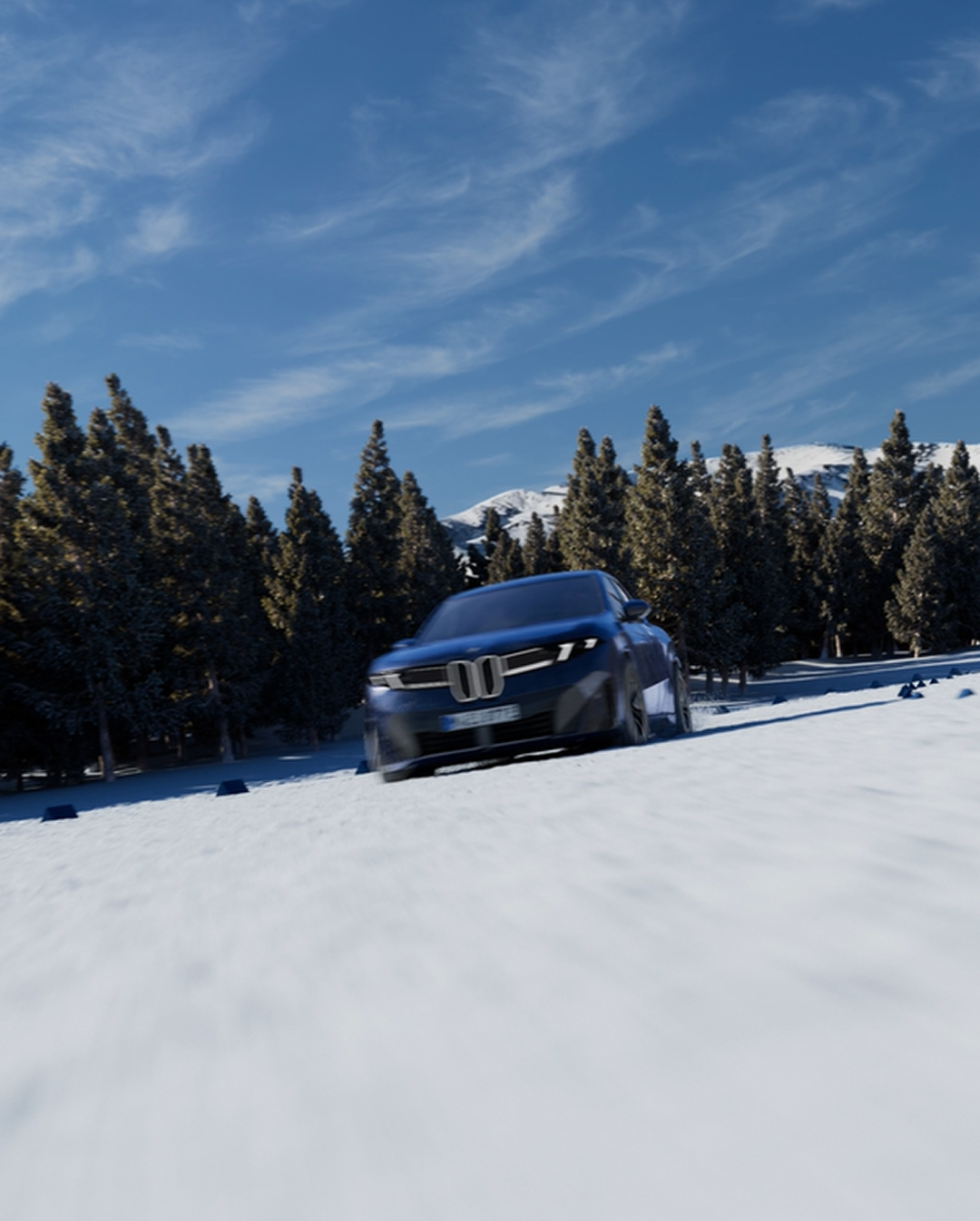
There is sometimes an assumption that premium CGI needs to be slow, minimal and restrained. In reality, luxury brands can use CGI for highly dynamic storytelling. Automotive campaigns can move from extreme close-ups into fast camera movements and large environments. Fashion and beauty campaigns can combine physical-looking materials with surreal transitions. Product films can turn a simple object into the centre of an entire visual world. The common thread is not a particular style. It is control over the image.

Creating a convincing CGI image is not simply a matter of making a detailed 3D model. Photorealism comes from the relationship between geometry, materials, lighting, camera movement, environment and post-production.For premium brands, every one of these elements contributes to how the product is perceived.
The quality of the source asset can have a major impact on the final result. Some projects begin with existing CAD files, engineering models or production-ready 3D assets. Others require a model to be built from photographs, product references or technical drawings. Existing assets are not always immediately suitable for commercial rendering. They may need to be cleaned, optimized, rebuilt or adapted for animation and close-up shots. Automotive CAD, for example, can contain enormous amounts of technical information that is unnecessary for visual production but still needs to be translated correctly into a render-ready model. The goal is to preserve what matters visually while preparing the asset for the demands of the campaign.
Luxury and automotive campaigns often involve products that cannot be publicly shown before their official launch. Production may therefore begin months before a vehicle or product becomes public, with confidential CAD files, specifications and visual assets shared under NDA. A professional CGI workflow should account for this from the beginning. Access to pre-launch assets, file sharing, review processes and final deliveries should follow the confidentiality requirements agreed with the client or agency. Establishing these requirements before production starts helps protect sensitive product information throughout the project and keeps the production process aligned with the planned launch.
One of the advantages of building a high-quality digital product asset is that it can potentially be used across more than one campaign format. The same vehicle or product model can become the foundation for a hero film, social content, product visuals, still images, FOOH activations and shorter campaign variations. This approach can give brands greater consistency across different touchpoints while reducing the need to recreate the product from scratch for every new asset. It also allows the initial CGI investment to support a wider content system rather than a single campaign film. The exact possibilities depend on the original production scope and how the digital assets are prepared and licensed.

A luxury product can have perfect geometry and still look artificial if the materials and lighting are wrong.Metal needs believable reflections. Glass needs depth and accurate refraction. Painted surfaces need the right balance between reflection and diffusion. Soft materials need subtle variation rather than a perfectly uniform texture. Lighting then brings those properties into the image.This is particularly important for automotive CGI, where bodywork can occupy most of the frame. The vehicle may be technically accurate, but without a carefully designed lighting environment, the surfaces can appear flat or synthetic.Good CGI therefore treats lighting as part of the creative direction rather than something added at the end.
A highly detailed model does not automatically create a premium film. Camera movement determines how the viewer experiences the product. A close-up can reveal material quality. A wider shot can establish scale. A slow movement can create a sense of precision, while a faster camera can communicate performance and energy. The same product can feel completely different depending on how it is photographed. This is one reason CGI production benefits from treating camera planning as an early creative decision rather than a technical detail left for the final stage.
Even when the majority of a film is created in 3D, the final image usually benefits from a strong VFX and compositing stage.Atmospheric effects, depth, motion blur, reflections, colour treatment, grain and subtle imperfections can help integrate the individual elements into a coherent image. For FOOH, compositing becomes even more important because CGI elements need to belong to a real environment. Shadows, reflections, perspective and atmospheric conditions all need to work together so that the illusion feels convincing.The viewer should notice the idea before noticing the technique.
The strongest CGI productions are not always built around a single beautiful shot. For brands and agencies, the greater opportunity is often to create a visual system that can support an entire campaign.
A carefully developed 3D product can become more than one film. The same asset can be used for a hero commercial, social cutdowns, vertical content, product animations, campaign stills or additional market adaptations. Environments and animations can also be developed with future deliverables in mind. This makes CGI particularly valuable for global brands that need consistency across multiple formats and markets.Instead of rebuilding every visual from the beginning, the production can be designed as a reusable creative asset.
For luxury and automotive brands, FOOH can provide a different kind of communication. Traditional product films often place the product in a carefully controlled environment. FOOH places the product into a recognisable world and creates a moment that feels unexpected. A car might appear to interact with a city landmark. A product might become part of an architectural installation. A campaign can take over a familiar urban environment without requiring a physical installation to exist. The format works particularly well when the visual idea is simple enough to understand immediately but unusual enough to stop the scroll.
AI is also changing how premium CGI campaigns can be developed. Early visual exploration can now happen faster, allowing teams to test environments, moods, compositions and creative directions before committing to full production. AI can be useful for concept development and visual experimentation, while controlled 3D remains valuable for the product itself, camera accuracy, animation and final consistency.
For premium work, this distinction matters. Speed is useful, but control remains essential.A hybrid pipeline can therefore give creative teams more room to explore without asking the final production to sacrifice precision.
Luxury and automotive campaigns often involve agencies, brand teams, creative directors, production companies and multiple markets. The CGI studio sits somewhere inside that larger ecosystem.The best production partner understands how to work within it.
That means being able to interpret creative direction, communicate production limitations early, work with existing assets, manage approvals and deliver technically reliable content across different formats.The studio does not need to own the campaign idea. Its role is to make the idea possible at the level of quality the brand expects.
HAUT CGI combines traditional 3D production, VFX, FOOH, mixed reality and AI-assisted workflows to create premium visual campaigns for brands and agencies. The production approach is built around the requirements of the individual project rather than forcing every campaign into the same pipeline. Existing 3D assets can be developed into production-ready visuals, while projects that require new modeling, environments, animation or VFX can be built from the ground up.
For campaigns that need both precision and creative experimentation, a hybrid workflow can also be used to accelerate visual development while maintaining controlled 3D production where accuracy matters most. The result is a production process designed around the final image — whether that image is a cinematic automotive film, a luxury product campaign or a FOOH concept designed for social media.