What Is FOOH? A Complete Guide to Fake Out-of-Home Advertising
A complete guide to FOOH advertising, from real-world footage and CGI integration to production, product launches, social campaigns and realistic visual effects.
Published:
September 18, 2026
CGI
↑
VFX
↑
FOOH
↑
AI
↑
CGI
↑
VFX
↑
FOOH
↑
AI
↑
CGI
↑
VFX
↑
FOOH
↑
AI
↑
CGI
↑
VFX
↑
FOOH
↑
AI
↑
CGI
↑
VFX
↑
FOOH
↑
AI
↑
CGI
↑
VFX
↑
FOOH
↑
AI
↑
What Is FOOH? A Complete Guide to Fake Out-of-Home Advertising
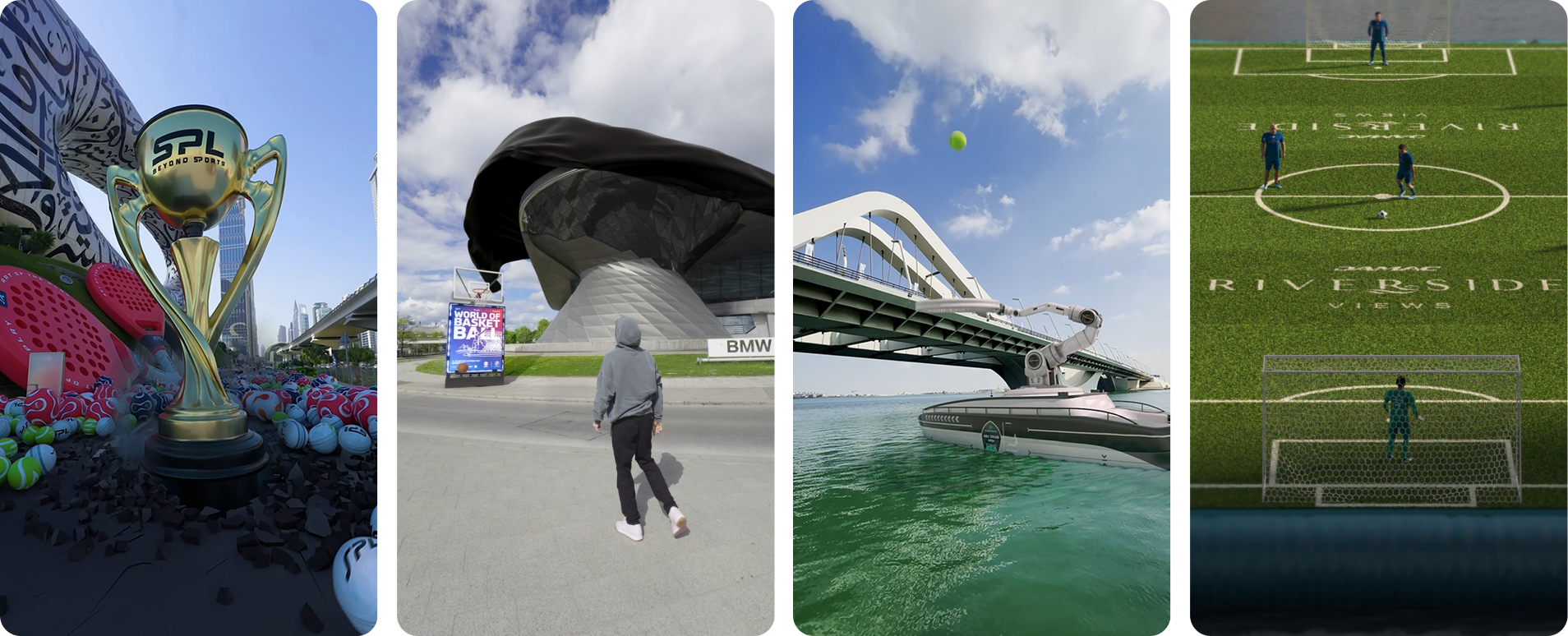
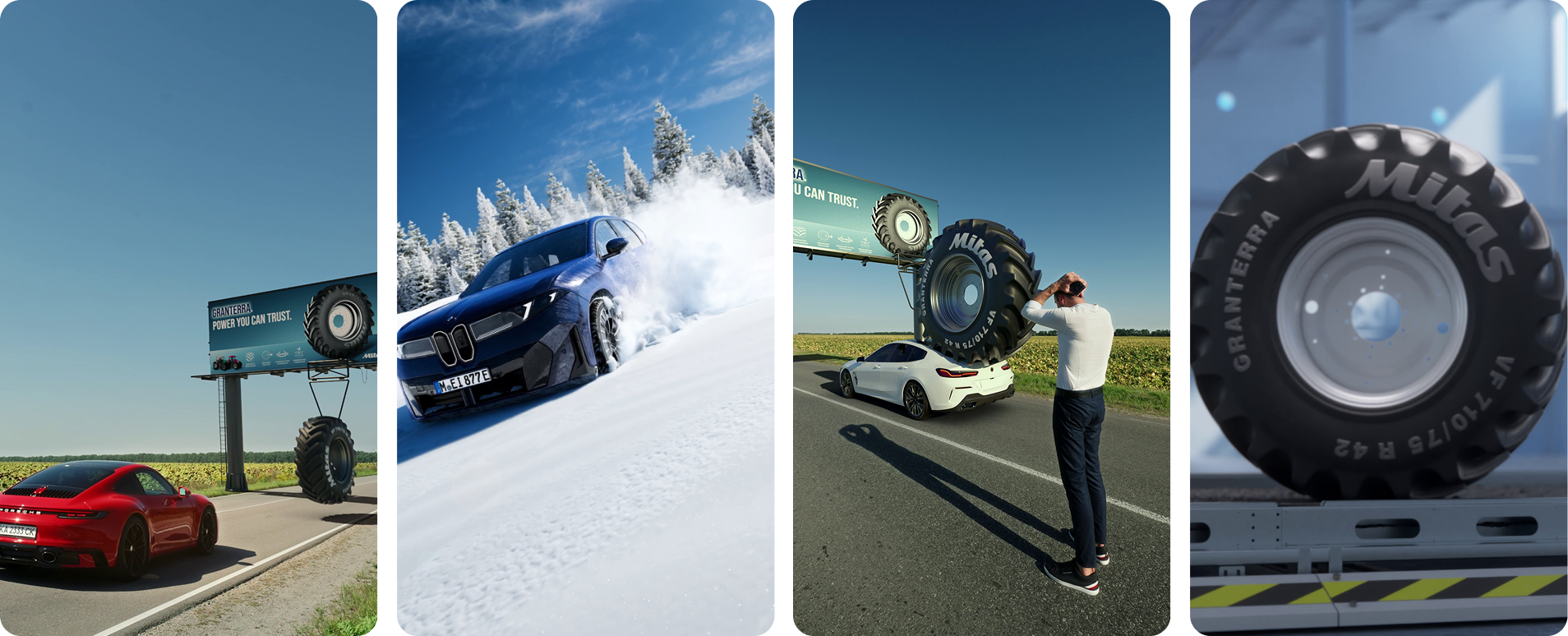
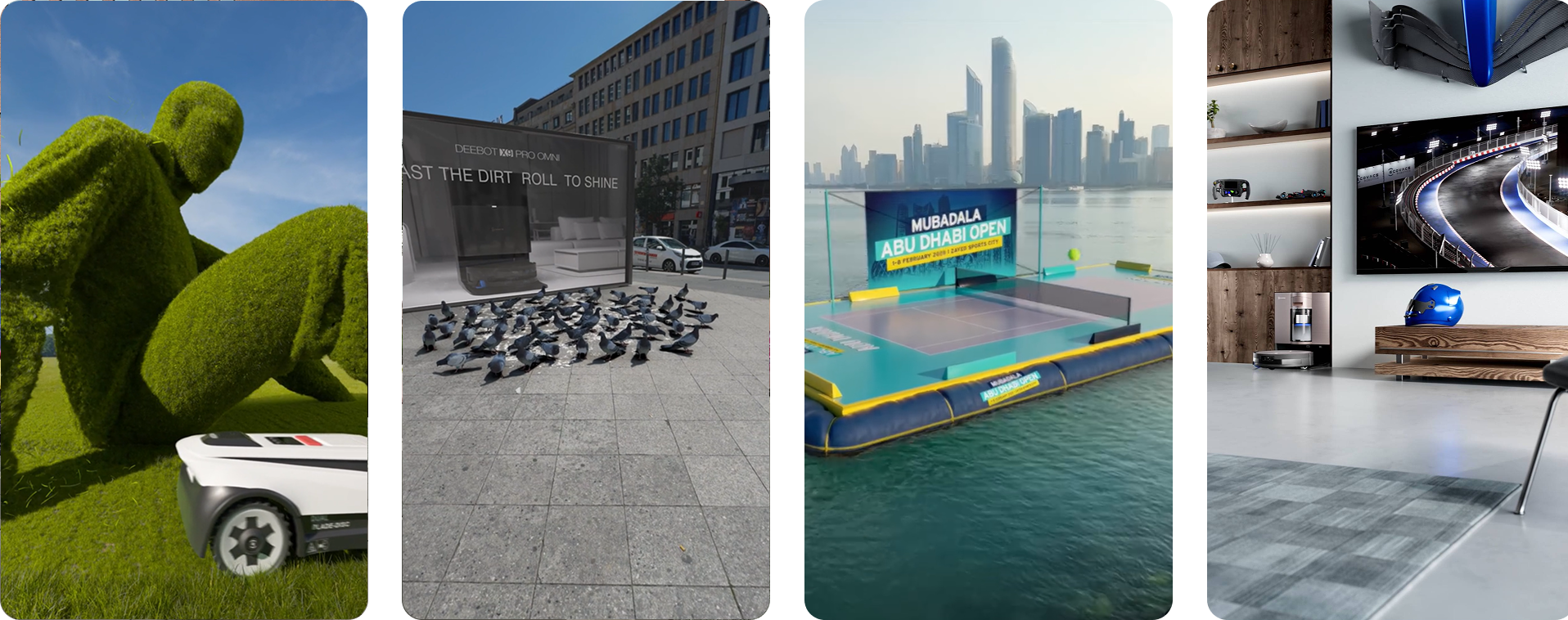
FOOH stands for Fake Out-of-Home advertising. It is a type of visual content designed to look like a real outdoor advertising activation, often showing an oversized product, object or visual effect interacting with a real-world environment.
The key to FOOH is realism. A typical FOOH video combines real footage of a location with CGI elements that are carefully integrated into the scene. When the tracking, perspective, lighting, reflections, shadows and compositing are convincing enough, the result can look like something that genuinely happened in the physical world.
This is part of what makes FOOH so effective for social media. The viewer sees something that appears unusual but believable, and that tension between "this can't be real" and "wait, is this actually real?" can encourage people to stop, watch and share.
Understanding FOOH and How It Works
What Does FOOH Actually Mean?
Fake Out-of-Home is essentially a digital interpretation of outdoor advertising. Instead of physically installing an enormous product or building a large-scale advertising structure, the visual is created digitally and presented as if it exists in a real-world location A FOOH video might show a giant beauty product appearing on a building, a vehicle moving through a city in an impossible way, or a product interacting with a landmark or urban environment. The creative possibilities are broad because the physical limitations of a traditional outdoor installation do not necessarily apply. The "fake" part refers to the digital construction of the activation, not necessarily to the visual quality. The objective is usually the opposite: to make the final result feel as real as possible.
FOOH vs Traditional OOH Advertising
Traditional OOH, or Out-of-Home advertising, is designed to exist physically in public spaces. This includes billboards, digital screens, transit advertising, building wraps, street furniture and other real-world advertising formats. FOOH borrows the visual language of outdoor advertising but turns it into digital content. Instead of physically placing a giant object in a city, a production studio can film or use footage of the location and integrate a digitally created product or activation into it. This changes the production process and also changes how the audience experiences the campaign. Traditional OOH is encountered in a physical environment, while FOOH is often distributed through social media and other digital channels where the audience can watch, replay and share the activation.
How Does FOOH Advertising Work?
A FOOH campaign usually starts with an idea: what should happen, where should it happen and why would people want to watch it? Once the concept is established, the production team needs to understand the real environment in which the CGI will be integrated. The location footage becomes the foundation for the visual. The team analyses the camera movement, perspective, scale, lighting and surrounding architecture before creating or preparing the 3D elements that will appear in the scene. The final stage is integration. CGI objects need to respond to the environment in a believable way, with matching perspective, lighting, reflections, shadows, movement and compositing. The goal is to make the digital element feel as though it was actually captured by the camera.
Why Does FOOH Look So Real?
Realism in FOOH comes from many small details working together. It is not enough to create a highly detailed 3D model and place it over a piece of footage. The CGI needs to match the perspective and camera movement of the original footage. The scale has to make sense within the environment, while lighting and shadows need to behave consistently with the real scene. Reflections, contact points, atmospheric conditions and interactions with surrounding objects can also have a significant effect on how believable the result feels. These details are part of the FOOH production pipeline. The better the digital elements are integrated into the footage, the less the viewer has to think about the production process itself.
Camera Tracking and Perspective
Camera tracking is one of the important technical foundations of a convincing FOOH video. The production team needs to understand how the camera moves through the scene so that the CGI elements move consistently with the real environment. Perspective is equally important. A digitally created product that is too large, too small or positioned incorrectly can immediately look artificial, even if the model itself is photorealistic. The 3D scene therefore needs to be built around the camera and the footage. This allows the CGI product, object or effect to maintain the correct relationship with the surrounding architecture throughout the shot.
Lighting, Shadows and Reflections
Lighting is another major part of making CGI feel like it belongs inside real footage. The digital product needs to respond to the same light conditions as the environment around it. This can involve matching the direction and quality of the light, creating realistic shadows and contact points, and reproducing reflections from the surrounding environment. Depending on the scene, atmospheric effects and colour treatment may also need to be matched between the footage and CGI. These elements may appear subtle to the viewer, but together they create the visual consistency that makes a FOOH activation believable.
Live Footage and CGI: The Core of FOOH
One of the most common approaches to FOOH is to combine real footage with CGI. The physical environment is captured by a camera, while the product, object or activation is created digitally and integrated into that footage.
This approach gives the production the visual credibility of a real location while allowing the creative team to introduce something that could not realistically be installed there. The result can feel like a real event even though the activation itself was never physically built. The production does not necessarily recreate the entire environment in CGI. In many cases, it is more efficient and visually convincing to use real footage as the foundation and create only the digital elements that the concept requires.
Full-CGI FOOH vs Mixed-Reality FOOH
Not every FOOH production uses the same balance between live action and CGI. A mixed-reality approach typically starts with real footage of an actual environment and integrates CGI elements into it. A more fully digital approach can recreate a larger part of the scene in CGI. This can provide greater control over the environment, camera and visual effects, but it can also increase the production scope considerably. For many FOOH campaigns, the most practical solution is therefore not to build everything digitally. Instead, the production team can use the real environment wherever possible and focus CGI production on the product, activation and elements that need to be controlled digitally.
Why Not Build the Entire Environment in CGI?
It is technically possible to recreate an entire environment digitally, but that does not automatically make it the best production approach. Rebuilding a large real-world environment can require substantial modelling, texturing, lighting and rendering work. Using real footage as the foundation can preserve the natural detail of the location while allowing the production team to concentrate its CGI work on the elements that matter most to the concept. This is one reason why FOOH production often relies on a carefully balanced workflow. The goal is not to create as much CGI as possible. The goal is to create enough controlled CGI to make the final image feel completely believable.
The Role of 3D Assets in FOOH
The product or main CGI object is often one of the most important digital assets in a FOOH campaign. Depending on the client and project, the production team may receive an existing CAD or 3D model or create the asset specifically for the campaign. The model needs to be prepared not only for visual quality but also for the way it will interact with the environment. Materials, reflections, scale and surface detail all become particularly important when a digital product is being placed into real footage. A well-prepared 3D asset can also potentially be reused across other campaign formats. Depending on the scope, the same product model may support FOOH content, CGI product videos, still visuals or social adaptations.
Can AI Be Used in FOOH Production?
AI can be used as part of a FOOH production workflow, but it is not necessarily used in every project or every shot. When the main objective is photorealistic integration, the production team needs to consider whether AI will actually improve the result. AI can support certain parts of visual development or production, including visual exploration, selected generated elements and other stages where it provides a useful creative or technical advantage. CGI remains important when precise control over the product, camera, geometry, materials, lighting or interaction with the environment is required. The priority is therefore not to use AI simply because it is available. A FOOH production should use the tools that help achieve the most convincing final image.
FOOH for Brands, Products and Social Campaigns
What Products Work Well in FOOH?
FOOH can work across a wide range of products and industries. Beauty, FMCG, fashion, automotive and consumer technology can all benefit from the format, particularly when the product itself can become part of an unexpected visual situation. Physical products can be especially effective because they give the audience something recognisable to anchor the visual around. A familiar product appearing at an impossible scale or in an unexpected location creates an immediate contrast between the ordinary and the extraordinary. FOOH is not limited to physical products, however. The format can also be used to communicate services, brand messages, launches and broader campaign ideas when the creative concept can be translated into a strong visual moment.
FOOH for Product Launches
FOOH can be particularly useful around a product launch because it allows the product to become the centre of a visual event. Instead of simply showing a new product, the campaign can create a situation around it that gives audiences a reason to stop and look. This can be especially useful for products that have a strong visual identity, unusual physical characteristics or a feature that can be translated into a large-scale visual idea. The CGI environment allows the product to be presented in ways that would not necessarily be practical during a traditional launch campaign. FOOH can also sit alongside other launch content, including hero CGI films, product visuals, social cutdowns and paid-media adaptations.
Why FOOH Works Well for Social Media
FOOH was closely associated with the rise of short-form social video because the format is naturally built around a strong visual hook. The viewer can understand the basic idea quickly, while the realism of the execution creates curiosity about whether the event is actually real. Vertical video is particularly common because platforms such as Instagram and TikTok are built around mobile-first viewing. A FOOH campaign can also be adapted into other formats when the campaign requires additional placements. The content can be used organically, as part of paid media or alongside influencer activity. In some campaigns, creators or influencers can also become part of the wider activation, with FOOH providing an additional visual layer rather than simply functioning as standard influencer content.
FOOH Deliverables and Social Formats
The main FOOH asset is often created in a vertical format for social media, particularly 9:16. Depending on the campaign, additional versions may be created for 1:1 and 16:9, as well as shorter cutdowns, loops or platform-specific adaptations.
The required deliverables should ideally be considered before production begins. Camera framing, composition and the way the CGI interacts with the environment can change depending on the final aspect ratio. Planning these formats early can help the production team build the scene in a way that remains visually strong across the intended campaign placements rather than simply cropping the final video afterwards.
How Long Does FOOH Production Take?
The production timeline depends on the complexity of the idea and the amount of CGI required. A relatively straightforward FOOH video may require a shorter production period, while more complex product models, simulations, environments or multiple shots can extend the schedule. Location and footage requirements can also affect the process. If actors or additional production elements are required, these need to be planned alongside the CGI workflow.
The most useful way to estimate a FOOH timeline is therefore to look at the complete scope rather than the final video length alone. The concept, footage, product asset, animation, simulations, number of shots and required formats all contribute to the production schedule.
What Affects the Cost of FOOH Production?
FOOH pricing depends on the specific production scope rather than simply the duration of the final video. Factors can include the location and geography, complexity of the 3D product or object, existing CAD or 3D assets, camera and tracking requirements, animation, simulations, number of shots and final deliverables.
The presence of actors or additional live-action production can also affect the budget. A simple product integration into existing footage and a complex campaign involving filming, actors, multiple CGI assets and simulations can therefore have very different production requirements. For a more detailed breakdown of FOOH and CGI production costs, see our FOOH & CGI Commercial Production Cost guide.
How to Choose a FOOH Production Studio
A strong FOOH portfolio should show more than impressive-looking CGI. Look for work where the integration between the digital element and the real environment feels convincing, because this is one of the central challenges of FOOH production.
It is also useful to understand how the studio approaches the production process. Ask how they handle concept development, footage, camera tracking, 3D assets, look development, animation, compositing, revisions and final formats.
For a more detailed guide to evaluating a production partner, see How to Choose a CGI & FOOH Production Studio in 2026. For agencies, our Agency Guide to CGI & FOOH Production also covers briefing, collaboration and managing CGI production with an external studio.
FOOH Production: From Idea to Final Video
The process usually starts before any CGI work begins. The creative idea needs to establish what the audience will see, why the activation belongs in that environment and what makes the moment interesting enough to watch. Once the concept is defined, the production team can develop the storyboard and visual direction, assess the location and footage, prepare or create the 3D assets and plan the camera and integration. Styleshots and look development can then establish how the final CGI should look within the real environment.
After the visual direction is approved, the production moves into animation, lighting, rendering and compositing. Final post-production, sound design and format adaptations then prepare the content for its intended social, paid-media or campaign placements.
Realism Is the Core of FOOH
The most important part of FOOH is not how much CGI is used. It is how convincingly the CGI belongs in the scene. A visually impressive 3D product can still look artificial if its scale is wrong, the perspective does not match, the lighting is inconsistent or the shadows and reflections do not respond to the environment. Conversely, a relatively simple digital object can feel convincing when these relationships are carefully controlled.
This is why FOOH production sits between creative concept development, 3D production, visual effects and compositing. Every part of the workflow contributes to the final illusion.
How HAUT CGI Approaches FOOH Production
At HAUT, FOOH starts with the creative idea and the real environment in which the idea needs to work. We then look at how the product or CGI element can be integrated into that environment while maintaining the perspective, scale, lighting, reflections and overall visual behaviour of the scene.
Depending on the project, we can work with existing product assets or create the required 3D model, develop the visual direction, prepare the animation and handle the CGI integration and post-production. The workflow can also include live-action filming when new footage is required for the concept. AI can be introduced where it genuinely supports the production, but realism remains the priority. The production approach is therefore selected according to what will create the most convincing result rather than using a particular technology simply for the sake of using it.
FOOH Campaigns and Brand Content
FOOH can function as a standalone social activation or as part of a larger campaign. A hero FOOH video can sit alongside product CGI, still visuals, shorter social edits, paid-media adaptations and other campaign content.
For product launches, this can create multiple opportunities to introduce the same product through different visual moments. The exact content system depends on the campaign strategy, product and available assets, but the underlying CGI production can potentially support more than one format. This is where FOOH becomes more than a single viral-looking video. When planned as part of a broader content system, it can become one visual expression of a larger product or brand campaign.
FAQ
What does FOOH stand for?
FOOH stands for Fake Out-of-Home advertising. It is a digital advertising format designed to look like a real-world outdoor activation, usually by combining real footage with CGI elements.
Is FOOH real or CGI?
FOOH can combine both. A common approach uses real footage of a location and integrates CGI products, objects or effects into the scene. Some productions can use a more fully digital environment, depending on the creative and technical requirements.
How are FOOH videos made?
FOOH videos typically begin with a creative concept, followed by location and footage planning, 3D asset preparation, camera tracking, visual development, animation, lighting, rendering and compositing. The CGI is then integrated into the real environment to create a convincing final image.
Is FOOH the same as CGI?
Not exactly. CGI is the computer-generated imagery used to create digital objects, environments or effects. FOOH is a specific type of advertising content that often uses CGI to create the appearance of an outdoor activation.
What is the difference between FOOH and OOH?
Traditional OOH advertising exists physically in the real world, such as billboards, building wraps or transit advertising. FOOH uses digital production to create an outdoor-looking activation that is distributed primarily as video content through digital channels.
Can FOOH be used for product launches?
Yes. FOOH can be used to create a visually distinctive launch moment by placing a product into an unexpected or exaggerated real-world situation. It can also be combined with other launch assets such as CGI product films, stills and social content.
What format is usually used for FOOH?
Vertical 9:16 is commonly used for social platforms, but FOOH can also be produced or adapted for 1:1 and 16:9, depending on the campaign and media requirements.
How much does a FOOH video cost?
The cost depends on factors such as geography, footage requirements, 3D modelling, product complexity, camera tracking, animation, simulations, actors, number of shots and final deliverables. See our FOOH & CGI Commercial Production Cost guide for a broader explanation of CGI and FOOH production pricing.
Can AI be used to make FOOH?
AI can be used as part of a FOOH workflow for selected stages such as visual exploration or generated elements. However, CGI remains important when the production requires precise control over the product, camera, materials, lighting and integration with the real environment.
Can any product be used in FOOH?
FOOH can be adapted to many products and industries, including beauty, FMCG, fashion, automotive and consumer technology. The strongest approach depends on the product, campaign objective and creative idea.
SUMMARY
FOOH, or Fake Out-of-Home advertising, combines the visual language of outdoor advertising with digital production. By integrating CGI into real-world footage, brands can create product activations and visual moments that feel physically possible while introducing ideas that would be difficult or expensive to build in the real world. The effectiveness of FOOH depends heavily on the quality of the integration. Camera tracking, perspective, scale, lighting, shadows, reflections, materials and compositing all need to work together to make the CGI feel like part of the original environment. For brands, FOOH can be particularly useful for product launches, social media campaigns and short-form content where a strong visual hook can help capture attention. The format can stand alone or become part of a wider CGI content system that includes product films, stills, loops and paid-media adaptations.



.png)